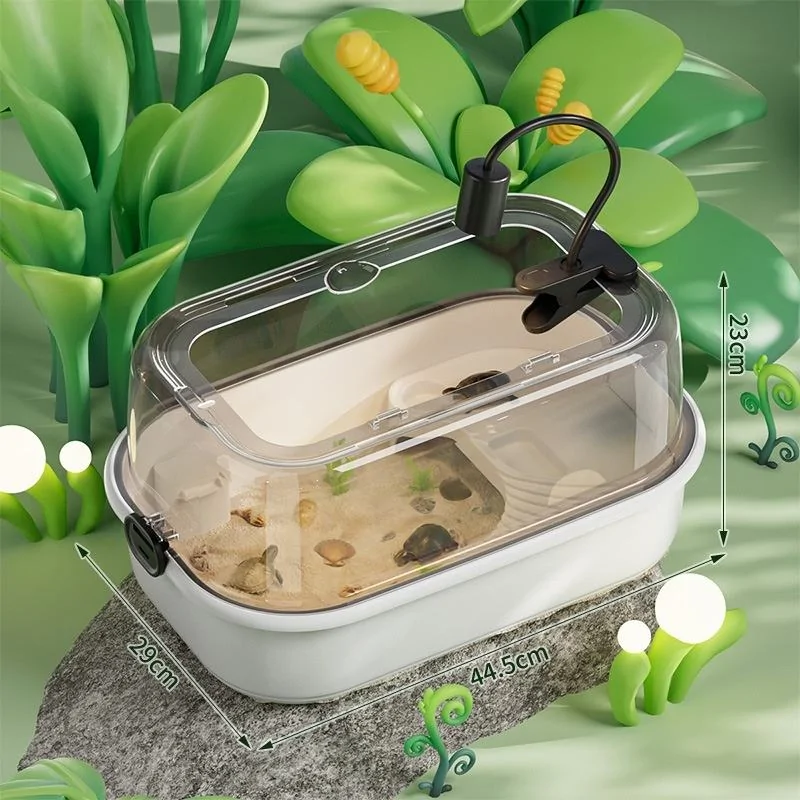

Turtles spend their time both in water and on land. A good turtle habitat must reflect this lifestyle. Aquatic turtles need more water to swim, while semi-aquatic species require both land and water zones. The tank should have smooth walls, enough depth for swimming, and a secure surface for basking. The habitat must also maintain clean water and a warm temperature to support healthy shell and skin conditions.
| Requirement | Description | Benefit |
|---|---|---|
| Water Area | Deep enough for swimming | Encourages exercise |
| Basking Platform | Dry space for resting | Prevents shell problems |
| UVB Lighting | Artificial sunlight | Supports calcium absorption |
| Filtration System | Removes waste and odor | Keeps water clean |
There are several types of turtle tanks available. Each has unique features suited for different turtle species and home environments.
Glass tanks are a popular choice due to their clear view and durability. They provide excellent visibility and make it easy to observe your turtle’s activities. Glass is non-porous, so it doesn’t absorb odors or bacteria. However, glass tanks are heavier and can be fragile if not handled carefully.
A Plastic Turtle Tank is lightweight, strong, and easy to move. It is ideal for beginners or for keeping small to medium-sized turtles. Plastic tanks come in various shapes and often include built-in basking areas and water filters. They are easy to clean and maintain, which helps keep your pet’s habitat healthy. This type of tank is practical, affordable, and a great choice for those who need a simple yet efficient setup.
Acrylic tanks are lighter than glass and offer good transparency. They are less likely to break but can get scratched more easily. Acrylic tanks are a modern alternative, combining strength with an elegant look. They are perfect for custom designs and can be shaped to fit your space.
The size of your turtle tank matters more than the material. A turtle grows quickly, so the tank should allow enough space for movement. As a general rule, each inch of a turtle’s shell needs at least 10 gallons of water. For example, a 5-inch turtle requires a 50-gallon tank. Adding land and basking areas helps keep the environment natural and stimulating.
| Turtle Size | Water Volume Needed | Example Tank Size |
|---|---|---|
| 3 inches | 30 gallons | Small turtle tank |
| 5 inches | 50 gallons | Medium turtle tank |
| 8 inches | 80 gallons | Large turtle habitat |
A strong water filtration system is vital for any turtle tank. Turtles produce more waste than fish, and unclean water can lead to disease. The filter helps remove food debris, waste, and bacteria. Choose a filter that matches your tank’s size and water depth. For best results, clean the filter regularly and change part of the water weekly. In Plastic Turtle Tanks, filters are often built-in for convenience.
Turtles need UVB lighting to stay healthy. UVB rays help them absorb calcium, which keeps their shells and bones strong. A basking lamp is also necessary to maintain body temperature. The basking spot should reach around 30°C (86°F), while the water should stay between 24–28°C (75–82°F). Proper lighting and heating help your turtle stay active and prevent health issues.
Every turtle tank should have a dry area for basking. A basking platform gives your pet space to rest and dry its shell. The surface should be slightly textured to prevent slipping. Many Plastic Turtle Tanks include a built-in basking zone that is easy for turtles to climb onto. This area helps regulate their temperature and promotes natural behavior.
| Tank Section | Function | Suggested Feature |
|---|---|---|
| Water Zone | Swimming and feeding | Deep, clean, filtered water |
| Land Area | Resting and basking | Rough-textured platform |
| Lighting Zone | Heat and UV exposure | UVB and basking lamp |
Clean water is essential for a turtle’s health. You should remove uneaten food daily and clean the tank every one to two weeks. For Plastic Turtle Tanks, cleaning is simple due to their smooth surface and light weight. Use a soft brush to remove algae and rinse the filter system frequently. Regular maintenance prevents odor and keeps the habitat safe.
Adding accessories makes your turtle tank more comfortable. You can include rocks, floating logs, and plants to create a natural environment. Make sure all decorations are non-toxic and have smooth edges to prevent injury. Artificial plants are a good choice because they are easy to clean and last longer.
Many beginners make the mistake of using tanks that are too small or skipping filtration. Overcrowded tanks can lead to stress and poor water quality. Avoid sharp decorations and ensure that your turtle cannot escape. Always check water temperature and lighting daily.
Among all options, Plastic Turtle Tanks are often the most practical choice. They combine durability, safety, and easy maintenance. Plastic is less likely to crack, and the tanks are usually designed with built-in features like ramps, filters, and platforms. Their lightweight design allows you to move them easily when cleaning or adjusting your turtle’s environment.
The best kind of tank for a turtle is one that supports its natural lifestyle, provides enough space, and maintains clean water. Both glass and plastic tanks have their advantages, but a Plastic Turtle Tank offers a great balance between durability, convenience, and affordability.