The violin bow is not merely an accessory; it's an instrument in its own right, fundamentally shaping the tone, articulation, and expressive capabilities of your Solid Wood Violin. While the violin body (crafted from tonewoods like spruce and maple) produces the core sound, the bow acts as the engine and the artist's direct connection to the strings. The choice of wood for the bow stick is paramount, influencing responsiveness, weight, balance, durability, and ultimately, the sound drawn from the violin. Let's delve into the woods that bring bows to life.
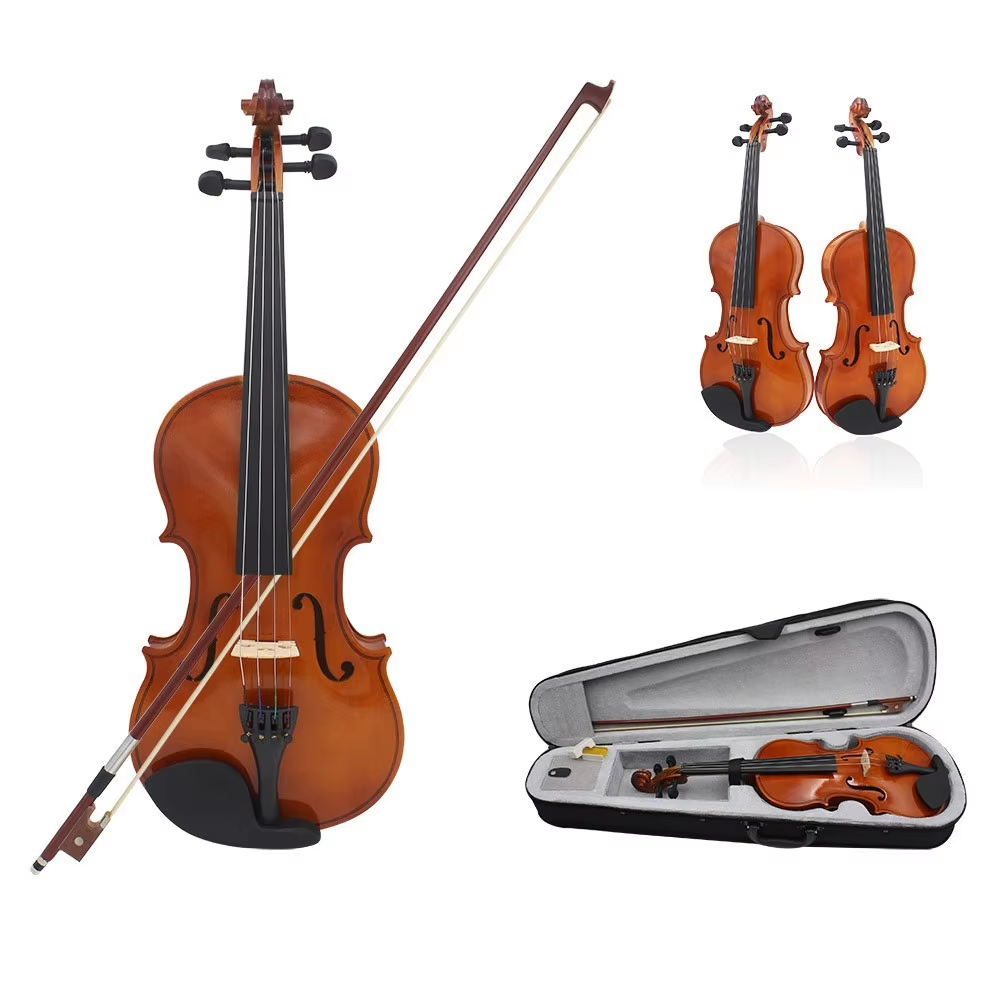
The Critical Role of Bow Wood for a Solid Wood Violin:
A Solid Wood Violin, with its carefully selected and carved spruce top and maple back/sides, possesses inherent resonance and tonal potential. However, unlocking this potential fully requires a bow with specific physical properties:
-
Strength & Stiffness: To transmit energy efficiently to the string without excessive flex or breakage.
-
Resilience & Springiness (Recurve): The bow must bend under pressure (when tightened) and spring back instantly, allowing for controlled bouncing strokes (spiccato, sautillé) and a lively response. This "recurve" is crucial.
-
Lightness: Enables agility and reduces player fatigue during long sessions or complex passages.
-
Density & Balance: Affects the weight distribution and the overall "feel" in the hand, influencing control and articulation.
-
Stability: Must resist warping due to humidity changes or tension over time.
Only a handful of woods naturally possess this rare combination of properties.
The King of Bow Woods: Pernambuco (Pau-Brasil)
-
Origin & History: Hailing from the endangered Caesalpinia echinata tree found primarily in Brazil's Atlantic Forest (Pernambuco being a key state). Its unique properties were discovered by European bow makers (luthiers) in the late 18th century, notably François Tourte, who is often called the "Stradivari of the bow." It revolutionized bow design and set the standard.
-
Why it Reigns Supreme:
-
Unmatched Recurve & Responsiveness: Pernambuco possesses an extraordinary natural springiness. It bends predictably under tension and snaps back with incredible speed and precision. This allows for effortless execution of off-string strokes and unparalleled articulation.
-
Optimal Density & Strength: It has a high density-to-strength ratio, meaning it's incredibly strong and stiff for its weight. This provides the necessary rigidity for clear tone production while remaining remarkably light.
-
Superior Sound Transmission: Pernambuco efficiently transfers the player's energy into the string, drawing out the richest, most complex overtones and the fullest dynamic range from a Solid Wood Violin. It offers warmth, clarity, projection, and nuance.
-
Stability (When Aged & Treated): Well-seasoned Pernambuco, properly treated and crafted, exhibits good resistance to warping.
-
The Catch - Rarity & Cost: Due to centuries of overharvesting (originally for dye, later for bows) and habitat destruction, Pernambuco is critically endangered. Its trade is strictly regulated under CITES Appendix I (since 2007). This scarcity, combined with its unparalleled performance, makes genuine Pernambuco bows extremely valuable, often costing thousands of dollars. They are primarily the domain of professional musicians and serious collectors. Acquiring one often represents a significant, long-term investment alongside a quality Solid Wood Violin.
The Primary Alternative: Brazilwood
-
Origin & Identity: Often confused with Pernambuco, Brazilwood generally refers to other species within the Caesalpinia genus (like Caesalpinia brasiliensis or Caesalpinia violacea), or sometimes even unrelated woods marketed under this name. It's more abundant and less regulated than true Pernambuco.
-
Characteristics & Use:
-
The Workhorse for Learners & Intermediate Players: Brazilwood is the most common material for student and intermediate-level bows. It offers a reasonable balance of strength, flexibility, and affordability.
-
Performance: While it shares some characteristics with Pernambuco, it generally lacks the same level of density, resilience, and sonic refinement. Brazilwood bows can be slightly heavier, less responsive for advanced techniques, and produce a sound that might be less complex or slightly thinner compared to high-end Pernambuco when played on a Solid Wood Violin.
-
Variability: Quality varies significantly. Lower-grade Brazilwood can be prone to warping or breaking. Higher-grade, well-selected Brazilwood, often termed "Pernambuco-grade Brazilwood" (though not the same species), can approach lower-tier Pernambuco in performance and is a good value option for advancing students or amateurs seeking a step up from basic fiberglass.
-
Importance: Brazilwood provides an accessible entry point into playing with a wooden bow, making it a practical choice for beginners paired with their first Solid Wood Violin.
The Historic Predecessor: Snakewood
-
Origin & Appearance: Comes from the Brosimum guianense tree, native to Central and South America. Named for its distinctive, dark, speckled grain pattern resembling snake skin.
-
Historical Significance: Snakewood was the primary wood used for high-quality bows before the discovery of Pernambuco's superiority in the late 18th century. Baroque bows were often made from it.
-
Characteristics:
-
Extreme Density & Hardness: Snakewood is incredibly dense and hard, making it very strong and durable.
-
Weight & Feel: This density often results in a heavier bow, which can feel less nimble than Pernambuco.
-
Resilience: While strong, it doesn't possess the same exceptional springiness and "snap back" as Pernambuco. It can be somewhat brittle.
-
Sound: Tends to produce a clear, focused, but potentially slightly drier or less warm tone compared to Pernambuco on a Solid Wood Violin.
-
Modern Use: Rarely used for modern bows due to its weight, brittleness, and the superiority of Pernambuco. It's mainly found in authentic reproductions of Baroque bows or as a decorative wood for the frog (the heel of the bow).
Beyond Wood: Modern Materials
While wood remains the gold standard for tonal quality and tradition, modern materials offer alternatives, especially at entry levels or for specific needs:
-
Carbon Fiber:
-
Pros: Extremely durable, resistant to warping from humidity/temperature, consistent performance, often more affordable than Pernambuco, good for beginners/travel/harsh climates. Modern high-end carbon fiber bows can rival mid-tier Pernambuco in responsiveness.
-
Cons: Can sometimes sound slightly brighter or less acoustically complex than the finest Pernambuco when played on a sensitive Solid Wood Violin. Lacks the organic feel and tradition of wood.
-
Fiberglass:
-
Pros: Very inexpensive, highly durable, virtually unbreakable under normal use. Common for absolute beginner bows.
-
Cons: Generally lacks the responsiveness, balance, and tonal quality of wood or good carbon fiber. Can feel clunky and inhibit developing proper technique.
The Frog: Ebony's Domain
While the stick material is paramount, the frog (the part held near the heel, housing the mechanism) is almost exclusively made from Ebony (typically Gabon Ebony - Diospyros crassiflora). Why?
-
Extreme Density & Hardness: Resists wear from the thumb and fingers, and holds the intricate mechanism securely.
-
Stability: Highly resistant to warping.
-
Aesthetics: Provides a beautiful, smooth, jet-black contrast to the wood stick and horsehair.
-
Weight: Its density contributes significantly to the overall balance point of the bow. Pearl slide and silver/ebony adjuster buttons are common fittings.
Choosing a Bow for Your Solid Wood Violin: Synergy Matters
Selecting a bow isn't just about the wood type; it's about finding the perfect partner for your specific Solid Wood Violin and your playing style. Consider:
-
Violin's Character: Does your violin need a bow to draw out warmth? Increase projection? Enhance clarity? A brighter bow might balance a dark violin, while a warmer bow might suit a bright instrument.
-
Playing Level & Needs: A beginner benefits from a sturdy, affordable Brazilwood or carbon fiber bow. An advancing student or amateur might seek higher-grade Brazilwood or entry Pernambuco. A professional demands the responsiveness and nuance of fine Pernambuco.
-
Budget: Be realistic. Allocate a reasonable portion of your instrument budget to the bow – it's critical. A fine Solid Wood Violin deserves a bow capable of revealing its potential.
-
Try Before You Buy: This is non-negotiable. Play your violin with different bows. Assess balance, weight, responsiveness, ease of articulation, and, most importantly, the sound produced. The best bow feels right and makes your violin sing.
Conclusion: The Wood That Wields the Voice
The magic of a Solid Wood Violin is unlocked by the dance between horsehair, string, and the bow stick. While Pernambuco remains the undisputed king for its unparalleled combination of strength, resilience, lightness, and ability to draw the most expressive and complex tones, its rarity and cost place it out of reach for many. Brazilwood provides an essential, accessible wooden alternative for learners and intermediates. Snakewood offers a glimpse into bow-making history. Modern materials like carbon fiber present durable and consistent options.
Understanding these woods empowers you to make informed choices. Remember, the ideal bow creates a synergy with your violin, transforming the player's intention into beautiful sound. When selecting a bow, prioritize trying them with your own Solid Wood Violin – the perfect match will feel like an extension of your musical voice. Investing in a well-crafted bow, appropriate to your level and instrument, is an investment in unlocking the true potential of your violin.
Contact us for information about factory information and service.