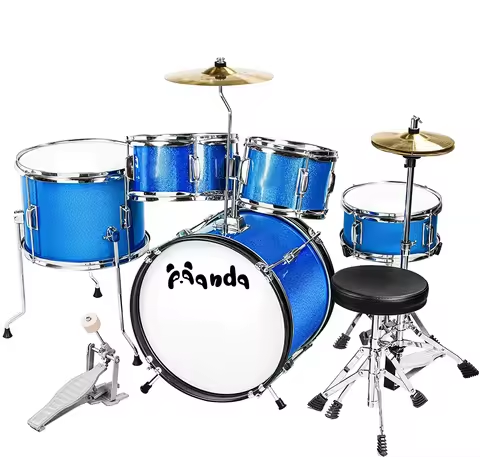
Choosing the right Drum Set for Beginners for your child involves many factors, and understanding the materials used in its construction is crucial. The materials directly impact the drum kit's sound, durability, safety, weight, price, and overall suitability for a young, enthusiastic learner. Let's break down the common materials you'll find in a typical kids' or beginner drum set.
Why Materials Matter in a Drum Set for Beginners:
For a child just starting their musical journey, the drum kit needs to be:
-
Durable: Withstand enthusiastic (and sometimes accidental) hits.
-
Safe: Free from sharp edges, toxic finishes, or easily breakable parts that could cause injury.
-
Lightweight: Easy for a child to move (if needed) and set up.
-
Affordable: Beginner kits need to be cost-effective.
-
Decent Sounding: While not pro-level, it should produce recognizable drum sounds to encourage practice.
The materials chosen by manufacturers directly address these priorities.
Core Material Components of a Kids' Drum Set for Beginners:
-
Drum Shells (The Body of the Drums - Bass Drum, Toms, Snare):
-
Poplar Wood: This is the MOST COMMON material for beginner and mid-level drum shells, including kids' kits. It's relatively inexpensive, lightweight (important for smaller players), and readily available. Poplar produces a warm, balanced tone that's perfectly adequate for learning. While not as resonant as higher-end woods, its affordability and workability make it ideal for a Drum Set for Beginners.
-
Basswood: Similar to poplar in price and weight. It's slightly softer and often used in very entry-level kits. The sound can be a bit less defined than poplar but still functional for practice.
-
Luan (Philippine Mahogany): Frequently found in the most budget-conscious starter kits. It's a lightweight tropical hardwood. While affordable, luan shells are generally thinner and less resonant than poplar, potentially sounding a bit "boxy." Durability can also be lower.
-
Synthetic Materials (Plastic/Composite/Fiberglass): Gaining popularity, especially in compact or "travel" style kids' kits. These offer extreme durability, weather resistance (good for outdoor play), and are very lightweight. Sound varies greatly – some aim for a traditional drum sound, others have a more electronic-like tone. They excel in toughness for rough handling.
-
Steel: Sometimes used for snare drums in beginner sets for a brighter, sharper "crack." Adds weight.
-
Drum Heads (The Playing Surface):
-
Single-Ply Plastic (PVC or PET): Standard on virtually all Drum Sets for Beginners, including kids' kits. They are pre-tuned, durable, and cost-effective. They produce a decent fundamental tone suitable for practice. Quality varies – thicker, clearer plastic generally sounds better and lasts longer than very thin, cloudy heads.
-
Material Note: Beginners rarely need the complex tone of coated or double-ply heads found on pro kits. The focus is on durability and ease of use.
-
Hardware (Stands, Pedals, Hoops, Lugs):
-
Steel: The backbone of drum hardware. Used for:
-
Tubing: On stands (cymbal, snare, tom arms) and the bass drum spur legs. Thickness varies – thicker steel is sturdier but heavier.
-
Hoops (Rims): Triple-flanged steel hoops are common on beginner snare drums and toms. They hold tension and are durable. Die-cast hoops (heavier, more focused sound) are rare on beginner kits.
-
Lugs: The casings that hold the tension rods. Steel is standard.
-
Pedals & Mechanisms: Bass drum pedals and hi-hat stand mechanisms rely heavily on steel for strength and action.
-
Zinc Alloy (Often "Pot Metal"): Frequently used for:
-
Lug Casings: Cheaper kits might use zinc alloy castings instead of steel.
-
Small Parts: Wingnuts, tension rod washers, some pedal components. Less durable than steel but cheaper.
-
Aluminum: Sometimes used for lightweight cymbal boom arms or upper tubing on stands in better beginner kits. Lighter than steel but strong.
-
Plastic/Nylon: Used for:
-
Memory Locks: On stands.
-
Bass Drum Spurs/Spurs Tips: Often plastic-tipped to prevent floor scratching.
-
Hi-Hat Clutch Parts: The plastic sleeve.
-
Throne (Stool) Base/Seat: Often a molded plastic seat and base components. The central column is usually steel.
-
Cymbals:
-
Brass Alloy (Typically CuZn - Copper/Zinc): This is the standard material for cymbals included with a Drum Set for Beginners. It's significantly cheaper than professional bronze cymbals (B8, B20). Brass cymbals produce a generally thinner, less complex, and slightly "trashier" sound. They are adequate for learning basic rhythms but lack the shimmer, sustain, and dynamic range of bronze. Durability is moderate.
-
Material Note: True bronze cymbals (B8 or B20) are a major upgrade but rarely come bundled with beginner kids' kits due to cost. They are sold separately.
-
Finishes:
-
Wraps: The most common finish for kids' and beginner kits. These are durable, printed vinyl sheets laminated onto the drum shells. They come in countless colors and patterns (sparkles, solids, graphics), making them visually appealing to children and highly resistant to scratches and dings. Easy to clean.
-
Paint/Lacquer: Less common than wraps on entry-level kids' kits. Offers a solid color but can be more prone to chipping than a wrap. Sometimes seen on kits with natural wood grain finishes (requiring a stained/sealed wood shell, less common at the lowest price points).
-
Safety: All finishes used on children's products should be non-toxic and lead-free. Reputable brands adhere to safety standards (like ASTM F963, CPSIA in the US, EN71 in Europe).
-
Material Considerations Specific to a Kids' Drum Set for Beginners:
-
Durability vs. Weight: Poplar wood strikes a good balance. Synthetics win on pure toughness but may compromise on traditional sound. Steel hardware is essential for stability.
-
Safety: Rounded edges on shells/hardware, non-toxic wraps/paints, and secure hardware connections are paramount. Avoid kits with flimsy metal parts prone to sharp breakage.
-
Sound Expectations: Manage expectations. A kids' Drum Set for Beginners made of poplar and brass cymbals won't sound like a professional maple kit with bronze cymbals. Its purpose is to provide a functional, playable platform for learning fundamentals affordably.
-
Longevity: A well-made poplar kit with decent hardware can last for years with care, supporting a child's progression. Very cheap luan kits or those with extremely poor hardware might need replacing sooner.
-
Upgrades: As a child progresses, the most impactful upgrades are usually replacing the stock plastic heads with better quality single-ply heads (like Remo UT or Evans EC1) and eventually replacing the brass cymbals with entry-level bronze cymbals (e.g., Zildjian Planet Z, Meinl HCS, Paiste 101). The shell material itself is less critical at the absolute beginner stage.
Conclusion:
When evaluating a Drum Set for Beginners for a young musician, understanding the materials provides key insights into its quality, durability, and suitability. Expect poplar wood shells for a balance of sound, weight, and cost, covered in durable, colorful, and safe vinyl wraps. Single-ply plastic heads are standard and practical. Steel hardware provides essential stability, while brass cymbals offer a functional starting point for learning rhythms. The focus is squarely on providing a safe, sturdy, affordable, and playable introduction to drumming. By choosing a kit made with appropriate materials from a reputable brand, you set your child up for a fun and successful start to their musical adventure, letting the joy of rhythm take center stage.
Contact us for information about factory information and service.