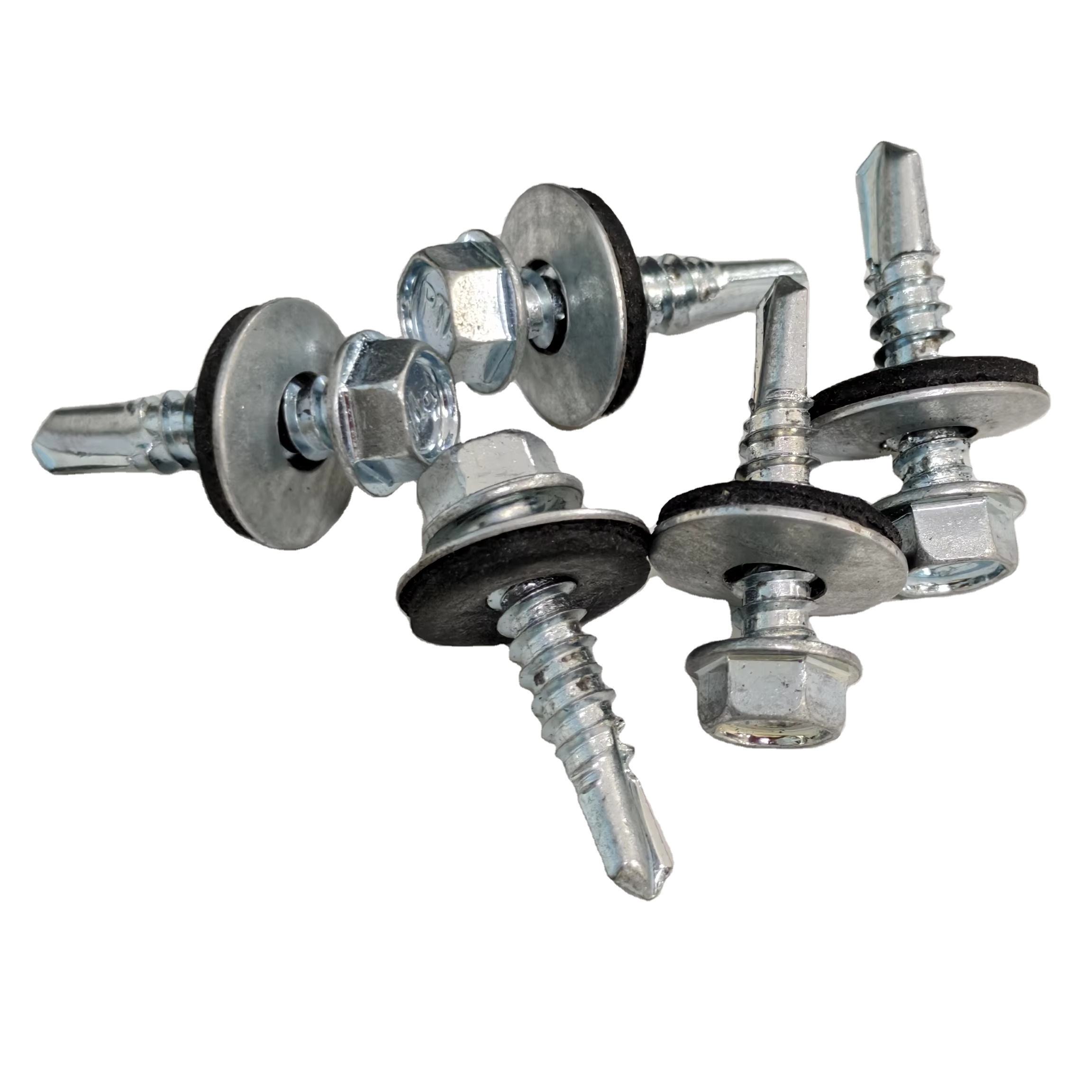

At the core of the distinction between Torx and hex head screws lies their drive system design. Hex head screws, also known as Allen screws, feature a hexagonal recess that requires a corresponding hexagonal key or bit for installation. This six-point interface has been the industry standard for decades, offering simplicity and widespread availability. Torx screws, alternatively, display a distinctive star-shaped pattern with six rounded points, creating a more complex drive geometry. This fundamental design variation leads to significant differences in performance, application, and user experience across various industries and use cases.
The most significant operational difference appears in torque handling capabilities. Traditional hex drives concentrate force at the six corners of the engagement, creating high point pressure that often leads to cam-out (the slipping of the driver from the screw head) under high torque. This frequently results in stripped screw heads and damaged tools. Torx screws fundamentally solve this problem through their radial spoke design, which distributes pressure evenly across all six points of contact. This engineering innovation allows up to ten times greater torque transmission without cam-out, providing exceptional performance in high-tension applications and automated assembly environments where consistent torque is critical.
The mechanical engagement between driver and screw differs substantially between these systems. Hex tools typically maintain contact at approximately 15% of the available surface area, focusing stress on the delicate corners of both the tool and fastener. Torx drivers achieve nearly 100% surface contact, distributing force evenly across the entire interface. This full-contact design dramatically reduces wear on both tools and fasteners, extends tool life, and prevents the rounded corners that plague hex fasteners. The enhanced stability is particularly valuable in precision applications where off-axis movement could damage sensitive components or compromise installation quality.
Hex head screws maintain strong advantages in general maintenance and applications where space constraints dictate tool selection. Their simple design allows for inexpensive manufacturing and the availability of countless inexpensive tools. The hexagonal keys require minimal clearance, making them ideal for confined spaces. Torx screws excel in precision industries like automotive manufacturing, aerospace, electronics, and medical devices where controlled torque and reliability are paramount. Their superior performance comes at a higher manufacturing cost, but this is offset by reduced assembly errors and improved product quality in high-value applications.
The wear characteristics of these systems show marked differences. Hex sockets tend to deform over time, particularly with repeated use or when subjected to overtightening. The sharp corners wear down, gradually reducing torque transmission capability and increasing the likelihood of strip-out. Torx maintains its integrity through numerous installation and removal cycles thanks to its rounded geometry and even stress distribution. This durability makes Torx particularly valuable in applications requiring maintenance or repeated disassembly, such as automotive components, industrial machinery, and high-end furniture where fasteners might be regularly accessed for service or adjustments.
While both systems continue to coexist in the marketplace, Torx has established clear superiority in professional and industrial applications where performance matters most. The hex drive remains relevant for general purpose use and situations where tool availability outweighs performance considerations. For critical applications requiring precise torque control, reduced maintenance issues, and superior reliability, Torx represents the modern engineering solution. The initial higher cost of Torx fasteners and tools is frequently justified through reduced assembly errors, fewer damaged components, and lower long-term maintenance costs, making them the growing preference across manufacturing and engineering disciplines.