Cats Need Climbing Spaces
Cats are naturally curious and love to climb. A cat tree offers them a safe space to jump, climb, scratch, and relax. Having a dedicated area for these activities prevents damage to your furniture, keeps your cat active, and allows them to engage in mental stimulation.
Customizable Design
Building your own cat tree means you can customize it according to your cat’s preferences and the available space in your home. Whether you have a large or small cat, you can adjust the design and size to fit their needs.
Cost-Effective Solution
Instead of spending a fortune on pre-made cat trees, making your own is a budget-friendly way to create something functional and tailored specifically to your cat's needs.
Materials Needed to Build a Cat Tree
To build a sturdy and safe cat tree, you'll need some basic materials. Here is a list of what you’ll require to get started:
| Material |
Purpose |
| Plywood |
For the base and platforms. |
| Wooden posts |
For the scratching areas and support. |
| Sisal rope |
For wrapping the scratching posts. |
| Carpet or fabric |
For covering platforms for comfort. |
| Nails or screws |
To secure the structure together. |
| Wood glue |
For extra stability and holding parts together. |
| Staple gun |
To attach fabric to platforms. |
Step-by-Step Guide to Building a Cat Tree
Step 1: Planning Your Design
The first step is to plan the design of your cat tree. Consider how many levels you want, whether you want platforms for sleeping, and where you’ll place scratching posts. If you have more than one cat, be sure to provide enough space for each one.
Key Design Elements:
-
Height: Cats love vertical space. A tree that reaches higher places will keep them entertained.
-
Scratching Areas: Use sisal rope to cover posts that cats can scratch.
-
Comfortable Platforms: Add soft materials like carpet or fleece for lounging spots.
Step 2: Cutting the Wood
Once you’ve decided on the design, measure and cut the plywood to create the platforms. The platforms should be large enough for your cat to comfortably lie down and stretch.
Tips for Cutting Wood:
-
Use a saw or a jigsaw to make clean, precise cuts.
-
Sand the edges to remove rough spots that could injure your cat.
Step 3: Assembling the Base
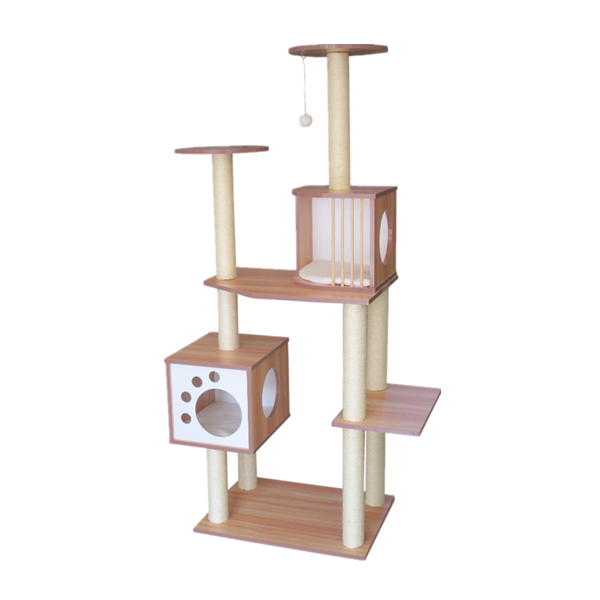
Start by assembling the base of the cat tree. A solid base is crucial for stability, as the entire structure will rely on it. Use plywood for the base, and screw in wooden posts for support.
| Step |
Action |
| Base Preparation |
Cut and assemble the plywood for the base. |
| Secure Posts |
Attach the wooden posts securely to the base. |
| Platform Placement |
Ensure platforms are level and well-supported. |
Step 4: Wrapping the Scratching Posts
Once the base and support structures are in place, wrap the wooden posts with sisal rope. This will give your cat a perfect scratching area that mimics the texture of tree bark. Secure the rope with a staple gun and glue to prevent it from unraveling.
Step 5: Attaching Platforms and Covering with Fabric
After wrapping the posts, you can attach the platforms to the structure. Make sure each platform is securely fastened. You can also cover the platforms with soft fabric or carpet for extra comfort. Staple the fabric securely around the edges.
Step 6: Final Assembly and Safety Check
Once everything is attached, check for stability. Test the cat tree by gently pressing down on each platform and post to ensure they are secure. If necessary, add extra screws or glue to reinforce the structure.
Extra Tips for Personalizing Your Cat Tree
-
Add Cat Toys: Hang a few toys from the posts or attach them to the platforms to keep your cat engaged.
-
Use Multiple Materials: Mix and match different textures, like carpet, wood, and fabric, to create an engaging environment.
-
Build a Hideaway: Consider adding a small enclosed space at the bottom of the tree for your cat to retreat to when they want some privacy.
Conclusion
Building a cat tree is a fun and rewarding project that will benefit both you and your cat. Not only does it provide your cat with a safe space to climb, scratch, and relax, but it also helps to keep your furniture safe from claw damage. With simple materials and a little time, you can create a custom-made cat tree that your feline will love.