

Healthcare simulation serves as a cornerstone for developing practical skills in a safe, controlled environment. By mimicking real-life medical situations, healthcare simulation enables trainees to engage in hands-on practice without the risk of harming real patients. It enhances clinical decision-making, teamwork, and communication, all crucial skills in healthcare.
In a typical healthcare simulation, trainees use manikins, actors, or computer-generated models to practice diagnostic procedures, surgery, or emergency response. The simulated scenarios can range from common situations, like performing a routine check-up, to more complex ones, such as managing a multi-victim accident or responding to a rare medical condition.
Healthcare simulation can be classified into various types, each serving specific educational purposes. These include:
Manikin-based Simulations: Using lifelike manikins to simulate medical procedures or emergencies.
Computer-based Simulations: Virtual platforms that simulate healthcare scenarios, allowing trainees to interact with digital patients.
Standardized Patient Simulations: Trained actors act as patients, providing a more interactive and personalized experience.
Task Trainers: Specialized tools that help trainees practice specific skills, such as inserting an IV or performing a surgical procedure.
| Type of Simulation | Description | Common Use Case |
|---|---|---|
| Manikin-based Simulations | Lifelike models that simulate human anatomy. | Surgery, CPR, emergency response |
| Computer-based Simulations | Digital platforms for virtual practice. | Diagnosis, treatment planning, virtual care |
| Standardized Patient Simulations | Actors playing roles as patients. | Patient interaction, history taking, communication skills |
| Task Trainers | Devices for practicing specific skills. | Inserting IVs, suturing, catheterization |
Healthcare simulation provides many benefits that traditional education cannot offer. It ensures that healthcare professionals gain confidence and competence before working with real patients. Some of the key advantages of healthcare simulation include:
Risk-Free Learning: Trainees can make mistakes without causing harm to actual patients, which is especially vital for high-risk procedures.
Enhanced Decision Making: Simulated scenarios improve critical thinking and decision-making skills in realistic settings.
Improved Communication and Teamwork: Many simulations are designed for group participation, helping trainees develop essential teamwork and communication skills.
Standardization of Training: Healthcare simulation ensures that all students experience consistent, high-quality training, regardless of their location.
| Benefit | Description |
|---|---|
| Risk-Free Learning | Allows mistakes to be made without real-world consequences. |
| Enhanced Decision Making | Helps trainees practice complex decision-making in a controlled setting. |
| Improved Communication | Facilitates team-based training for better communication in real-life situations. |
| Standardization of Training | Provides equal learning opportunities for students worldwide. |
One of the most significant impacts of healthcare simulation is its contribution to patient safety. By practicing in realistic settings, medical professionals are better prepared for real-world emergencies and medical procedures. In fact, studies have shown that simulation-based training can reduce medical errors and improve patient outcomes.
Additionally, healthcare simulation helps professionals practice high-stakes scenarios that they may rarely encounter but must be prepared for, such as complicated surgeries or handling life-threatening emergencies. This type of training builds confidence and competence, leading to better patient care and fewer errors.
As technology continues to evolve, so does healthcare simulation. Innovations in digital technology, artificial intelligence (AI), and virtual reality (VR) are pushing the boundaries of medical education. For example, virtual reality allows trainees to immerse themselves in lifelike simulations, while AI-powered systems can adjust scenarios in real-time, providing customized learning experiences.
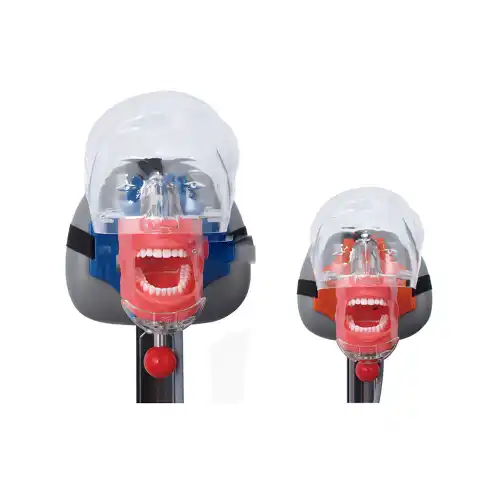
Dental simulation practice, in particular, has benefited from these advancements, offering students the ability to practice dental procedures and surgeries using virtual models. These technologies allow for a more interactive and dynamic learning experience, making training more effective and engaging.
| Technology | Description | Impact on Training |
|---|---|---|
| Virtual Reality (VR) | Fully immersive training environments. | Creates lifelike scenarios for practice. |
| Artificial Intelligence (AI) | Intelligent systems that adapt training scenarios in real-time. | Provides tailored learning experiences. |
| 3D Modeling and Printing | Digital 3D models for anatomy and medical devices. | Enhances the realism of simulations. |
Many healthcare organizations have adopted simulation as part of their continuous professional development programs. Hospitals, medical schools, and even dental schools now integrate simulation into their curriculums, helping professionals stay updated on the latest medical practices and technologies. Simulation also plays a critical role in training teams to respond to emergency situations, such as mass casualty events or natural disasters.
By incorporating simulation into healthcare systems, organizations ensure that their workforce is better equipped to handle the complexities of patient care. It also provides an opportunity for healthcare providers to stay current with the latest advancements in medical practices.
Looking ahead, the future of healthcare simulation seems bright. As medical practices become more advanced, the need for realistic, hands-on training will only increase. Innovations in AI, VR, and other technologies will continue to shape how healthcare professionals learn and practice.
Furthermore, the expanding use of simulation in healthcare could contribute to a more globally standardized approach to medical education. By offering uniform training experiences to healthcare workers worldwide, simulation has the potential to elevate the quality of care globally.
Healthcare simulation is revolutionizing the way medical professionals are trained. By providing a risk-free environment to practice essential skills, it ensures that practitioners are better prepared for real-world medical scenarios. Whether in dentistry, surgery, or emergency response, simulation offers many benefits that traditional education methods cannot. It improves patient safety, enhances communication and teamwork, and fosters a deeper understanding of medical procedures.
In conclusion, healthcare simulation is more than just a training tool—it is a critical component of modern healthcare education. As technology advances, its role in shaping the future of healthcare training will only grow. Welcome to inquiry, and explore the future of healthcare simulation as it continues to transform the landscape of medical education and patient care.