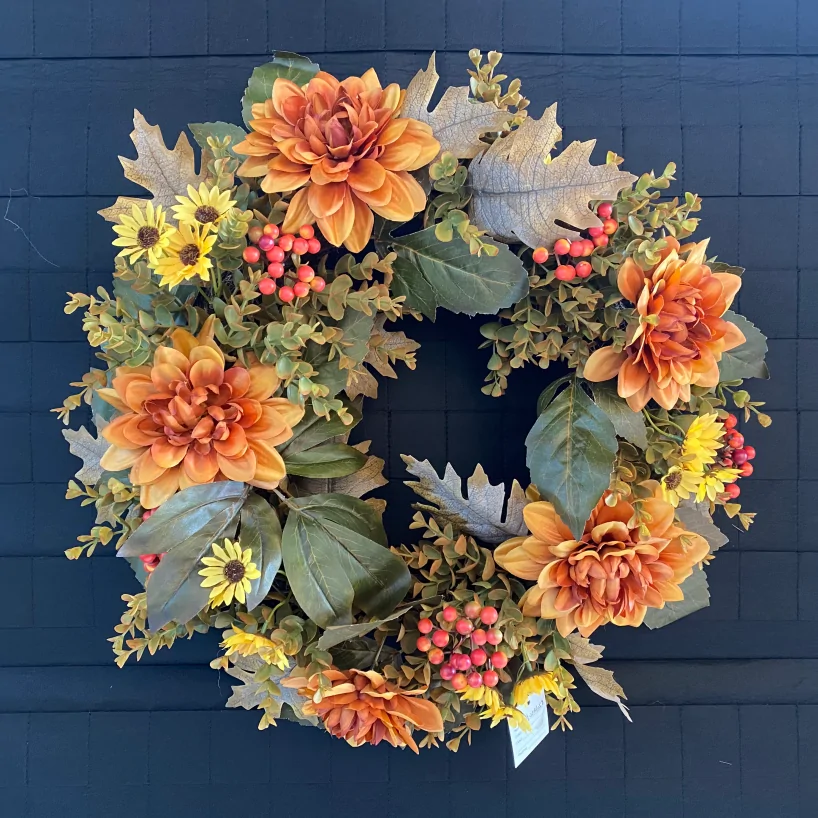

Before you begin, gather the following supplies:
Wreath Base: Choose between a grapevine, foam, or wire frame, depending on your desired style and the weight of the flowers.
Artificial Flowers: Select a variety of faux blooms such as roses, peonies, hydrangeas, or seasonal flowers that match your theme.
Greenery: Incorporate artificial leaves, ferns, or eucalyptus for added texture and fullness.
Floral Wire: Essential for attaching flowers and greenery securely.
Hot Glue Gun and Glue Sticks: For extra stability and securing delicate elements.
Wire Cutters: To trim flower stems to the desired length.
Ribbon or Bow: To add a decorative touch and facilitate hanging.
Start by preparing your wreath base. If you're using a grapevine wreath, you may need to trim any excess twigs to create a uniform shape. For foam or wire frames, ensure they are clean and ready for decoration.
Choose artificial flowers that complement each other in color and style. Trim the stems to approximately 4–6 inches in length using wire cutters. Remove any excess leaves or foliage that may interfere with the arrangement.
Begin by adding greenery to your wreath base. Use floral wire to secure the stems, layering them to create depth and fullness. Distribute the greenery evenly around the wreath to form a balanced foundation.
Start placing your artificial flowers into the greenery. Begin with the larger blooms and position them evenly around the wreath. Secure each flower with floral wire, ensuring they are firmly attached. Fill in any gaps with smaller flowers to achieve a cohesive look.
Incorporate filler flowers such as baby’s breath or small blossoms to add texture and interest. These elements can help fill any remaining spaces and enhance the overall appearance of the wreath.
For added stability, use a hot glue gun to secure any flowers or greenery that may be loose. Apply glue sparingly to avoid visible spots and ensure a clean finish.
To complete your wreath, attach a ribbon or bow at the top. This not only adds a decorative element but also provides a means for hanging the wreath.
Plan Your Design: Lay out your flowers and greenery before attaching them to ensure a balanced and harmonious arrangement.
Mix Textures: Combine different types of flowers and greenery to add depth and visual interest.
Secure Attachments: Use both floral wire and hot glue for a secure hold, especially for heavier elements.
Consider the Display Area: Choose colors and styles that complement the space where the wreath will be displayed.
Spring: Use pastel-colored flowers like tulips and daffodils, combined with fresh greenery.
Summer: Incorporate vibrant blooms such as sunflowers and daisies with lush foliage.
Fall: Opt for warm-toned flowers like chrysanthemums and marigolds, accented with autumn leaves.
Winter: Choose evergreens, holly, and poinsettias for a festive touch.
Uneven Arrangement: Step back periodically to assess your wreath from different angles and make adjustments as needed.
Loose Elements: Reinforce with additional floral wire or hot glue to secure any loose flowers or greenery.
Overcrowding: Ensure there is adequate space between elements to allow each piece to be appreciated individually.
Making a wreath with artificial flowers is a delightful way to personalize your home décor. By following these steps and tips, you can create a beautiful and lasting piece that adds charm to any space. Remember to take your time, enjoy the process, and let your creativity shine.
If you're interested in purchasing high-quality artificial flowers for your wreath-making projects, consider reaching out to a reputable silk flower manufacturer. They can provide a wide selection of faux blooms to suit any style or occasion.
We value your inquiry and are here to assist you in finding the perfect materials for your crafting needs.