Choosing the Right Artificial Flowers
Choosing the right flowers is crucial. Consider silk, foam, or latex Artificial Flowers. Mix large and small blooms for a natural look. Pick colors that match the wedding palette. Decide if you want a monochrome or multi-color bouquet. Balance bright and muted tones for visual harmony. Select greenery to fill gaps and add texture.
| Flower Type |
Material |
Best Use |
| Roses |
Silk |
Classic wedding bouquets |
| Peonies |
Foam |
Elegant arrangements |
| Hydrangea |
Latex |
Full, textured looks |
| Lilies |
Silk |
Statement focal blooms |
| Baby’s Breath |
Foam |
Fillers and soft touches |
Tools Needed for Bouquet Making
Preparation is key for success. Gather essential tools before starting. Scissors, floral tape, wires, and glue are necessary. Ribbons, decorative beads, and pins add elegance. A floral wire cutter helps trim thick stems. Use a hot glue gun to secure delicate pieces. These tools ensure stability and professional results.
| Tool |
Purpose |
Tip |
| Scissors |
Cutting stems |
Use sharp blades for clean cuts |
| Floral Tape |
Bind stems |
Wrap tightly for durability |
| Ribbon |
Decoration |
Match wedding theme and color |
| Glue Gun |
Secure petals |
Low-temperature glue prevents damage |
| Wire |
Shape stems |
Bend gently without snapping |
Preparing the Artificial Flowers
Start by trimming stems to desired length. Remove extra leaves or thorns. Group flowers by size and color. Large flowers form the center. Smaller flowers fill edges. Greenery adds volume and depth. Lay flowers flat to organize before assembling. Check petals for damage and adjust them. Proper preparation simplifies bouquet creation.
Step-by-Step Bouquet Assembly
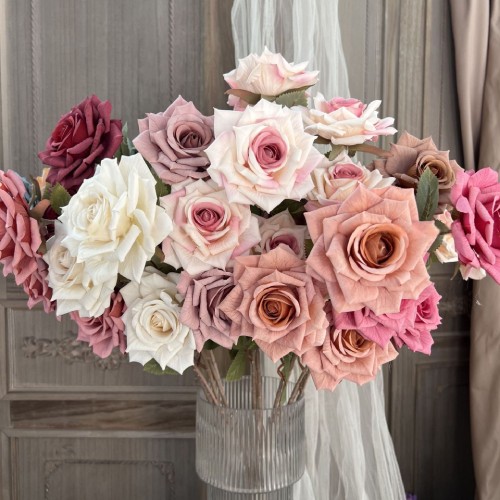
Begin with a base of greenery. Add large focal blooms in the center. Surround with medium-sized flowers. Insert smaller blooms to fill gaps. Adjust height and angles for balance. Rotate bouquet while arranging to maintain symmetry. Bind stems with floral tape as you go. Add ribbon or lace for elegance. Secure with pins or glue if needed.
| Step |
Action |
Tip |
| 1 |
Arrange base |
Use greenery first for structure |
| 2 |
Add focal flowers |
Center large blooms for focus |
| 3 |
Fill gaps |
Balance colors and size evenly |
| 4 |
Bind stems |
Wrap tightly to secure bouquet |
| 5 |
Add decorations |
Ribbon or charms enhance style |
Adding Personal Touches
Personalization makes a bouquet memorable. Attach charms, lace, beads, or family keepsakes. Choose colors and textures that reflect personality. Small decorations complement Artificial Flowers naturally. Consider tying a ribbon with initials or wedding date. These details make bouquets unique and meaningful.
Proper care ensures longevity. Store bouquet in a cool, dry place. Avoid direct sunlight to prevent fading. Dust lightly with a soft brush. Handle with care to maintain petal shapes. Artificial bouquets can be reused for anniversaries, parties, or photo shoots.
Creative Bouquet Styles
Bridal bouquets come in multiple styles. Round bouquets are classic and compact. Cascade bouquets feature trailing blooms for elegance. Hand-tied bouquets are flexible and versatile. Mixing flower types adds depth and texture. Artificial flowers allow experimenting with bold combinations. You can try ombre colors, layered petals, or unique shapes.
Color Combinations and Trends
Choose colors according to wedding theme. Soft pastels suit spring weddings. Bold reds and purples add drama. Greenery balances vibrant hues. Mixing tones creates a natural look. Metallic accents like gold or silver enhance elegance. Artificial flowers maintain color consistency throughout the event.
Bouquet Size and Shape
Determine size based on dress and venue. Small bouquets suit casual or intimate weddings. Medium bouquets fit most venues and dresses. Large bouquets make a dramatic statement. Shape matters: round, cascading, or asymmetrical arrangements. Test bouquet proportion with bridal outfit before final assembly.
Using Artificial Flowers for DIY Creativity
DIY bouquets are budget-friendly and flexible. Artificial flowers allow multiple attempts without waste. Combine silk, foam, and latex blooms for varied texture. Use flower boxes, baskets, or vases creatively. Artificial flowers encourage experimenting with style and design.
Floral Accessories and Ribbon Ideas
Ribbons, lace, and beads enhance Artificial Flowers bouquets. Match colors with the wedding palette. Wrap stems tightly for secure hold. Consider bow styles for extra elegance. Small pins can attach charms or photos. Accessories personalize each bouquet beautifully.
Photography and Event Styling
Artificial bouquets photograph beautifully. No wilting ensures consistent images. Use bouquets for pre-wedding shoots, reception tables, or ceremony décor. Combine with greenery and flower boxes for layered visuals. Vibrant colors enhance photos and event aesthetics.
Advantages of Artificial Flowers
Artificial bouquets are durable, reusable, and low-maintenance. They save cost compared to fresh blooms. They allow flexibility in style, size, and color. Weather or seasonal availability doesn’t affect them. Brides can order in advance and assemble stress-free.
| Advantage |
Detail |
Benefit |
| Durability |
No wilting |
Lasts for years |
| Reusability |
Multiple events |
Cost-effective |
| Maintenance |
No watering |
Easy care |
| Flexibility |
Any color/shape |
Full customization |
| Seasonal |
All-year availability |
Consistent style |
Conclusion
Creating a bridal bouquet with Artificial Flowers is fun and rewarding. It allows customization, saves cost, and ensures long-lasting beauty. With the right flowers, tools, and techniques, anyone can craft a professional-looking bouquet. Adding personal touches, accessories, and creative designs makes it unique. These bouquets enhance weddings, photos, and memories. Following these steps guarantees elegance, durability, and satisfaction. Artificial bouquets are perfect for modern brides seeking style, practicality, and charm.Welcome to ask\uFF01